
TABLE OF CONTENTS
- IMPORTANT:
- Connect HDMI to Display:
- Automated Setup:
- Network Connection:
- Linking Your Display:
- Frequently Asked Questions:
- Helpful Articles:
IMPORTANT:
All DAKOS versions 3.55 and older are no longer supported by the DAKboard Support team. These instructions are for DAKOS version 3.0 and above. If you are looking for setup instructions for older versions of our DAKOS, please see the article Legacy Setup for DAKOS version 2.17 to 2.32, and visit our article section LEGACY DAKOS for support articles for End of Life versions of our OS.
Note: This article assumes that a Pre-Loaded SD card has already been added to a supported Pi computer. See our articles Raspberry Pi - Download and Install the DAKOS and Orange Pi - Download and Install DAKOS for details on all supported Pi Computers. The connection example below shows a Raspberry Pi 4B installed in a case. Other Pi computers' connections will be similar in process.
Connect HDMI to Display:
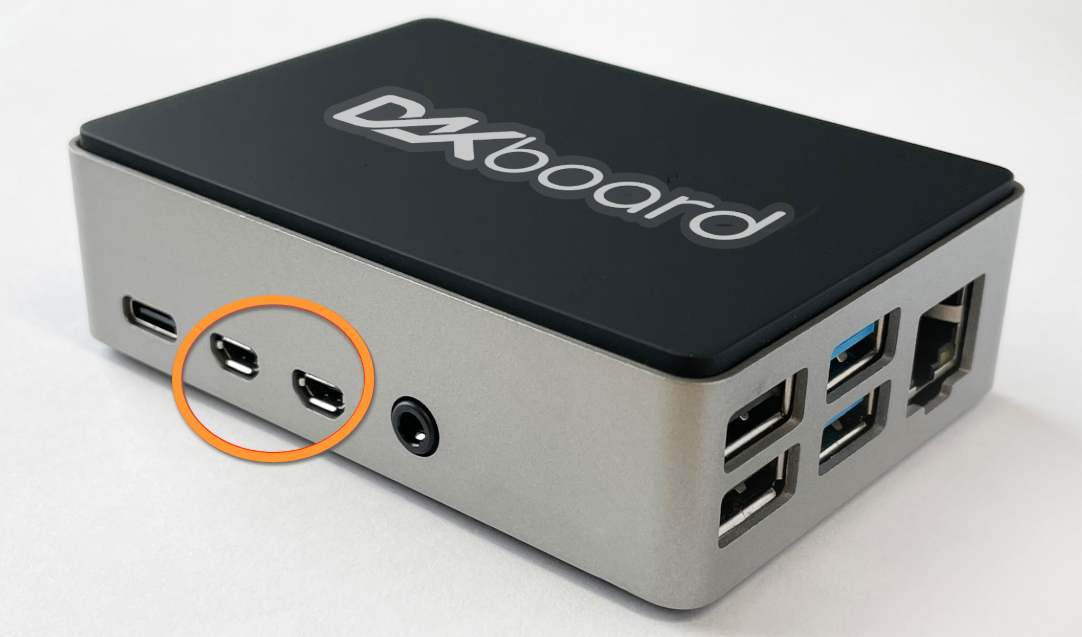
Connect the HDMI cable to the Mini-HDMI ports on the CPU, as shown, and the HDMI on the Display device. If a TV is being used, select the HDMI input labeled ARC/CEC when present:
Connect Power:
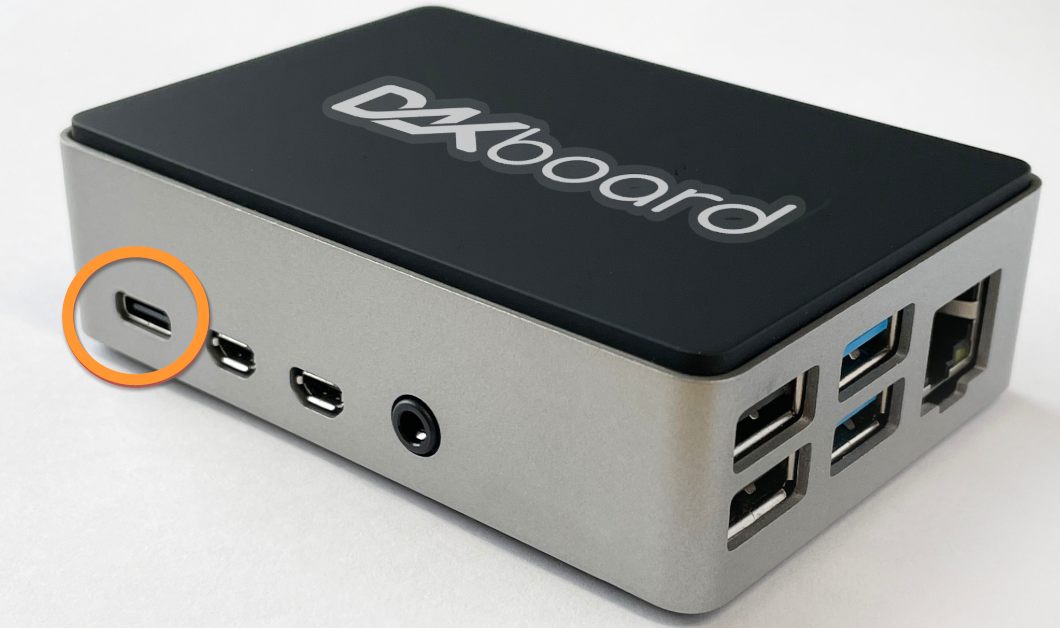
Connect the power cable to the power port highlighted below:
Automated Setup:
Your device will perform the first-time setup, indicated on the screen. This may take 1-2 minutes and will be ready to configure as soon as the following screen is displayed. Now you can move to set up the network:

Network Connection:
When you first set up your DAKOS device, or when it cannot join the network, it will create a local Hotspot to join to make changes. You can connect to this network using the QR codes or the details below. If you would alternatively like to set up via Ethernet, simply plug the Ethernet cable in and restart the device by unplugging it and plugging it back in. The CPU Mini (Pi Zero 2W) is wifi only; all other CPUs have an Ethernet connection.
If the QR codes do not work, you will see this network available on your phone/tablet/computer:
Name/SSID: DAKboard
Password: dakb5142
Connect to it using the Name/SSID and Password as above. Your Computer/Tablet/Phone may indicate that this connection has no internet. This is normal, and make sure to stay on the DAKboard wifi until the configuration is completed. Use the option to Always Stay Connected to prevent your device from kicking you off the DAKboard Hotspot. While on this hotspot, open a browser, type http://10.0.0.5 to access the settings page to update the wireless network configuration.
Devices on OS versions 3.55 to 4.08 will include the Touchscreen/On-Device Setup configuration button at the bottom of the welcome page, as seen below:

Touching this from a Touchscreen Monitor, or clicking it with a connected USB mouse, will also take you to the Settings Page without having to log into the DAKboard Hotspot. Versions 4.11 and above will automatically detect a connected Touchscreen or USB mouse and will load straight to the settings page.
NOTE: When entering your network Name/SSID and/or password, if you use Autofill or copy and paste, you may add hidden characters such as spaces to the password. This will fail to connect to your Network. Double-check your credentials do not contain these hidden characters.
Use this time to also set your resolution and other settings of your display as well, and click save:

When the following page is displayed, your device is connected to your network and ready to be linked to your dakboard.com account:

Hotspot Fails to Start or Connect:
If you are unable to access the DAKboard Hotspot, see our article DAKOS Troubleshooting: Setup Issues for details on how to manually access the settings page.
Linking Your Display:
To link your device, visit the Displays & Devices page and click the green ADD button. Type in your link code, add a name, select the screen you would like to display, and you're done!

NOTE: If the link code expires before you complete this step, reboot your DAKOS device by unplugging the power and plugging it back in to generate a new link code.
If you receive an error saying your Display was unable to link, the link code appears not to be working when you enter it into your display, or it fails to link with no error message, this may be a sign of a weak WiFi signal to your display. Try moving it closer to your Router or Access point, or move your Mesh node or WiFi extender closer to the DAKboard to improve this while completing your initial linking.
Supporting Documentation:
Frequently Asked Questions:
Below are the most Frequently Asked Questions about setting up your DAKOS device:
Where can you find the Serial Number on your DAKOS device?
For DAKOS devices running version 3.0 and above, the Serial Number is generated once the display connects. This will not be printed on your Device. You can find it on the Displays & Devices page next to the Display itself. For DAKOS devices 2.32 and below, there should be a sticker with the printed serial number on the back or bottom of the device. See our article Legacy Setup for DAKOS version 2.17 to 2.32 to see how to connect these devices to your account.
Helpful Articles:
Having trouble? See if these articles help
Reset your Device to Factory Settings
Trouble Connecting To A WiFi Network
Updating Your WiFi Credentials on Your DAKOS Device
Move a Display or CPU to a New DAKboard Account
How to Access Your DAKOS Settings Page
Legacy Setup for DAKOS version 2.17 to 2.32